
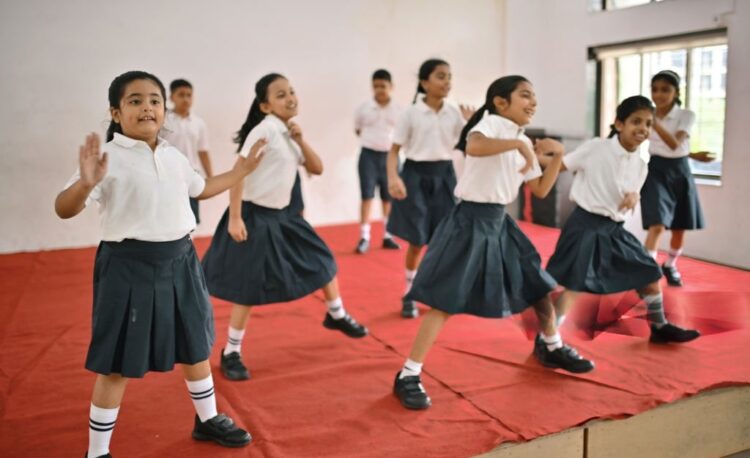
In a quiet village where traditions ran deep, a young girl discovered an ancient form of dance that used a wooden stick—not just as a prop, but as a symbol of power. What intrigued her most was that this dance was originally used by women to train in self-defense, hidden within graceful movements. Drawn to the rhythm and strength it embodied, she decided to learn it—not to perform for others, but to protect herself and honor her roots.
When her school introduced a new extracurricular program called “Cultural Dance and Movement,” the young girl signed up out of curiosity. She had never been part of any dance class before, let alone one involving sticks. On the first day, the instructor explained that this wasn’t just any dance—it was a traditional stick dance, rooted in history and meant to build rhythm, strength, and coordination. The girl was intrigued. It was graceful, but powerful. She decided to give it her full effort.
In the beginning, she found the steps tricky and the stick awkward in her hands. She often lost rhythm and stumbled during routines, but her teachers encouraged patience and discipline. Bit by bit, she learned to control her movements, listen to the beat, and time her strikes with others. What seemed chaotic at first soon turned into a harmonious flow. The stick stopped feeling like a challenge—it became an extension of her body.