
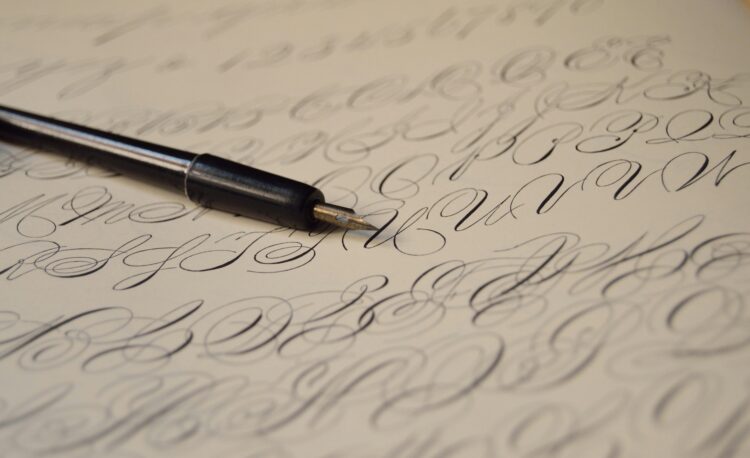
At first, calligraphy felt challenging. Holding the special pen at the right angle, controlling the ink flow, and getting the curves just right required a level of patience she wasn’t used to. Her hands would shake, and smudges often ruined her work. But her teacher encouraged her to slow down, breathe, and try again. With each practice sheet, she learned not only technique but also the value of persistence.
Soon, the girl began to enjoy the quiet focus calligraphy brought her. It became a calming escape from noisy classrooms and busy schedules. She experimented with different styles—bold Gothic letters, elegant copperplate scripts, and decorative flourishes. Each alphabet felt like an artwork. As her skills improved, so did her confidence. She proudly labeled her notebooks in calligraphy and even created bookmarks and cards for her friends.
Her talent didn’t go unnoticed. During a school exhibition, her teacher asked her to design the welcome banner in calligraphy. Seeing her work displayed so prominently made her feel proud and accomplished. She also started helping her classmates who struggled with their strokes, becoming a quiet leader in the group. Through calligraphy, she found her own rhythm—steady, artistic, and full of self-expression.
By the end of the year, she had filled a journal with quotes, poems, and practice strokes—all handwritten in elegant scripts. Calligraphy had taught her more than just beautiful writing; it had shown her the beauty of patience, detail, and dedication. With every careful letter she formed, she felt more connected to herself. What began as a simple interest turned into a lifelong passion—one graceful stroke at a time.